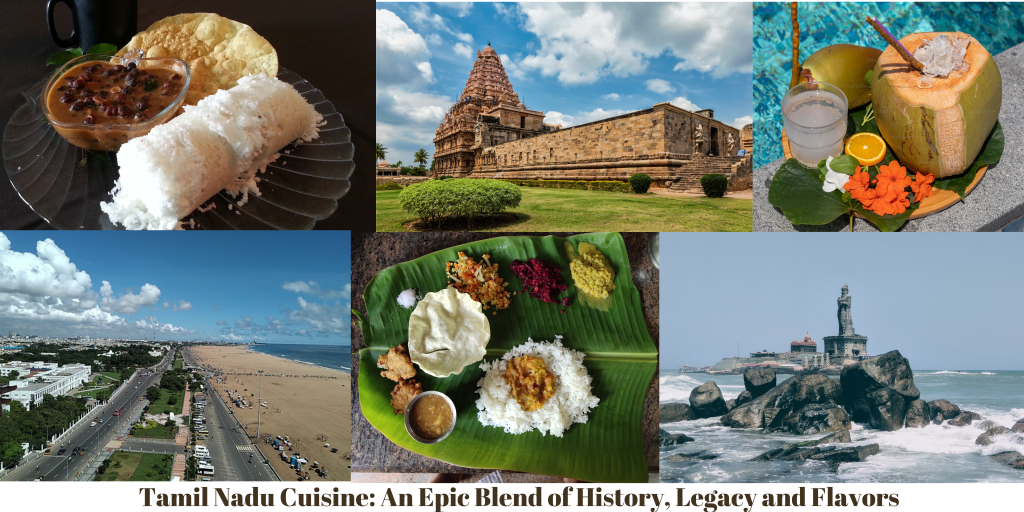
With its pedigree rooted in centuries-old traditions, Tamil Nadu – one of the world’s oldest civilizations – spotlights a magnificent mix of practices, spiritual beliefs, and kaleidoscopic anecdotes. Add this with food, and you will souse in the potpourri of flavors. Inheriting an epic blend of history and legacy, food has evolved here like nowhere else. A hungry soul is rewarded with uncountable mouth-watering aromas and savory dishes – from tangy Sambhar to the fulfilling Sappadu (a meal). The state’s cuisine speaks to you of evolution, geographic importance, and dynastic hegemony. It would be villainy to just stick with dosa-idli-vada and not try other dishes. Let’s recce the state, one grub at a time to solve Tamil Nadu’s riddles.
Once in Tamil Nadu, stir the simplistic setting to experience its complex flavors. Start your journey in Chennai. You can take the hill station route, covering Ooty, Yelagiri, Coonoor, Kodaikanal, and Kotagiri, or cover the various spiritual circuits.
One of the famous spiritual route circuits from Chennai to Kanyakumari. Start from Chennai; stop for a day each in Kanchipuram, Vellore, Trichy, and Salem; move to Madurai to visit Meenakshi temple; next to Tiruvaiyaar; then visit Brihadeshwara temple in Thanjavur; go to Rameshwaram for Dhanushkodi, Pamban Bridge and Ramanathaswamy temple, and finally halt your journey in Kanyakumari.
Each place in Tamil Nadu has its traditional food and preparation style. Thanjavur is famous for Ashoka Halwa (a type of confectionery); Tiruvaiyaar for Kumbakonam Degree Coffee; Mayavaram for Onion Dosas, and Vellore for Ambur Mughal Biryani and Arcot Makkan Peda.

Source: Wikimedia Commons
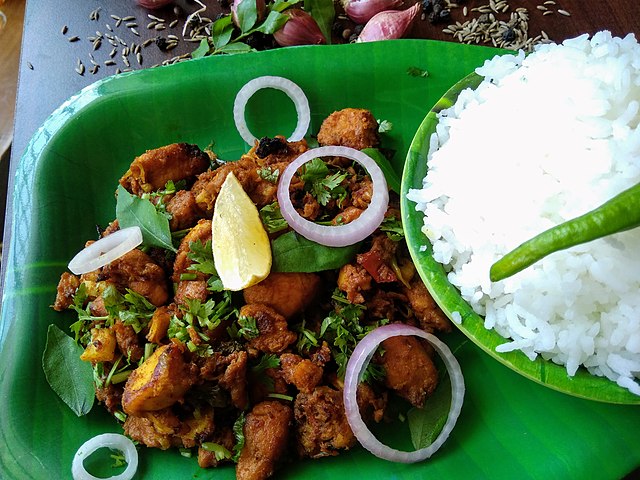
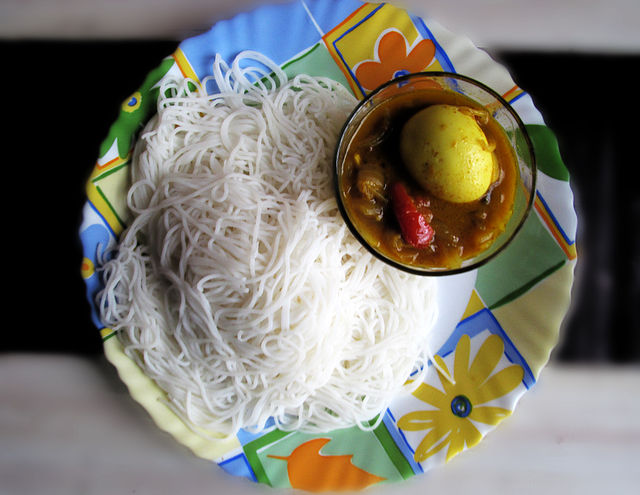
To make the most of your time here, dive headfirst into the Chettinad region’s delicacies, which ooze with notorious spices and aromas. Taste vegetarian dishes, including Idiyappam (string hopper) with curry, Uthappam (a kind of fluffy dosa), Paal Paniyaram (a dessert made from coconut milk and fried rice urad batter dollops), and non-vegetarian dishes made primarily using Chicken.
Source: wikimedia Common
Source: Wikimedia Commons
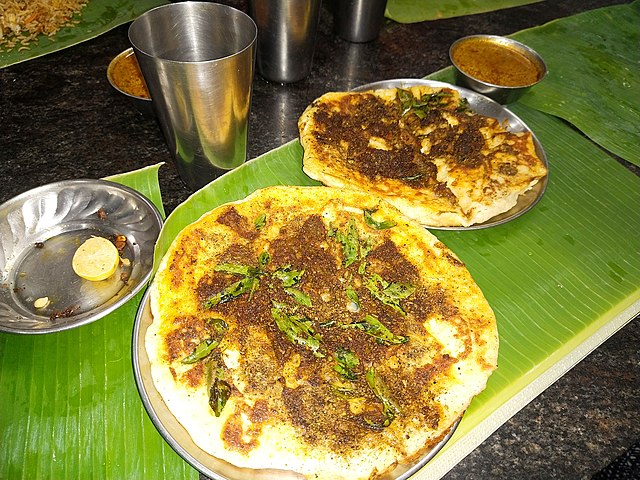
Next, taste Madurai food – abundant in mutton, chicken, and fish dishes. Madurai has unique foods such as Jigarthanda (translating to a “heart cooling drink”), Muttai Parotta (minced flatbread and scrambled egg), Paruthi Paal (traditional cotton seed beverage), Kari Dosai (dosa with mutton stuffing), and Ennai Dosai (dosa with lots of oil).
Source: Wikimedia Commons
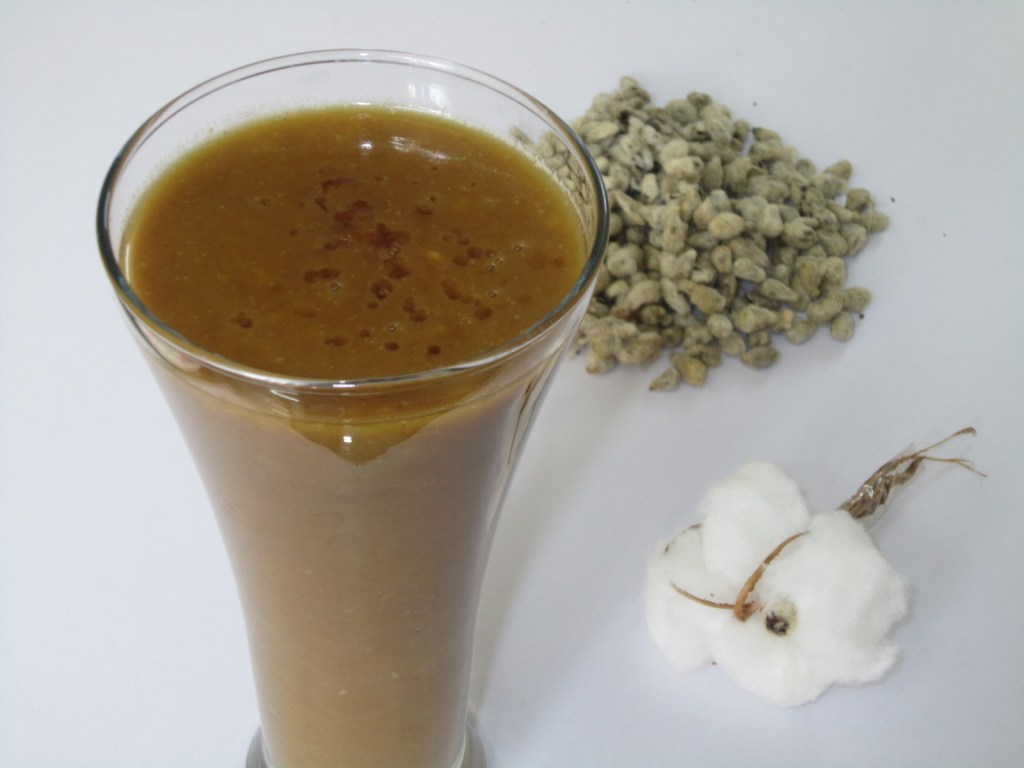
Source: Wikimedia Commons
Tamilians can easily spotlight tourists. The ancient Tamils revered hospitality as the greatest virtue, and hence would often you “Saptiya?”. Here, they are concerned and are asking you if you have had your meal. You ought to reply by saying ‘Sapten’ with appropriate head nodding. To continue the conversation, you can ask in return: “Neenga saptingla?”. There are high chances, you end up conversing for hours. Tamilians take deep pleasure in taking care of tourists and informing them about experiences. They obviously love their food.
Saapadu (meal) is the culmination of all flavors, which usually follows a tight sleep. As a part of pre-meal routine, an attendant places a Vaazhai Ilai (banana leaf) in front of you to serve multiple dishes on it one by one. The leaf’s wax-like coating prevents it from leaking.

Source: Wikimedia Commons
Even before taking the first morsel, you can sense the elegant use of peas, tamarind, and onions in dishes. Rice is mixed with Kuzhambu (tamarind-based stew), Poriyal (sautéed vegetable dish), Paruppu (Lentil), Sambar (a dish made with lentils), and Rasam (a soup of spices) in succession. Pachadi, pickle, vada, and curd accompany, while pieces of crisp Appalam (papad) are thrown in for heavenly bites. In the end, payasam (a pudding made of rice, ghee, milk, and rice) is nibbled to equilibrate sweet cravings. The climax is marked by chewing areca nuts for better digestion.
The dishes are served till you fold the leaf: an age-old custom that’s losing its significance in modern days. There is a meaning in the way of folding the leaf after eating. If one folds the leaf towards them, it means they are satisfied with the hospitality and would love to come back; if folded the other side, it indicates the opposite. In joyful functions, guests fold the leaf towards them, signifying their disposition to come back. In mournful gatherings, the leaf is folded away from them, signifying they don’t want such incidents to happen again.
Banana plant has religious and cultural significance in South India. The entire plant comes to use in different cycles, giving an important lesson of coming to use till the last breath. The leaves are used at temple’s entrance, in houses on auspicious occasions. Leaves are utilized for serving food; flowers and fruits are edible; stem is a great remedy for kidney stones; bark is used to tie flowers and make garlands, and roots give birth to a sapling before becoming fruitless. The leaves are discarded after the contents are consumed, making it eco-friendly.

Source: Wikimedia Commons
Keep craving; keep eating. For sweet connoisseurs, I suggest Kongunadu’s Santhakai (rice vermicelli dish) and Thengai Paal (Coconut milk). Spend some quality time curling up with a good read. Lightly, fill up your evenings with warming filter coffee. Combine it with some Murukku and let these perfect days wind down.
 Supriya Sahu
Leave a comment